About
I live in Ternopil. Most of these villages are two hours from my door.
— Vadym Ratynskyi
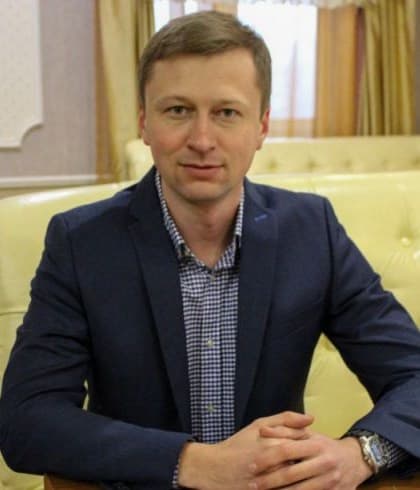
Ternopil sits in the middle of Galicia — the region that emptied out towards Canada, the United States, Brazil and Argentina between the 1890s and the 1930s. There is a reasonable chance the ship manifest with your family's name on it begins somewhere within a morning's drive of where I am sitting now. Half of those villages are today twenty houses and a cemetery going back to grass, and the residents who still remember the names of the families that left are approaching ninety.
In ten years there will be no one left to ask. That is why I am doing this now rather than someday.
I am not a historian and I am not a travel agent. For sixteen years I have taught and researched at Ternopil Ivan Puluj National Technical University, and my subject is a narrow one: how service businesses survive in Ukraine's rural communities. My doctorate — Doctor of Economic Sciences, Ukraine's higher research degree, awarded in 2026 — is on exactly that. Put plainly — the villages I study for a living are the villages I would be driving to for you. I know why they empty, which roads are passable in March, and how to ask a question in a village council so that it gets answered.
Why I do this
It did not begin with a family legend. There is no emigrant great-grandfather whose letters I found in an attic, and I am not going to invent one for a page like this. It began with fieldwork. For sixteen years my research has taken me into villages of two hundred people to ask why the shop closed, why the school closed, why the young go — and in almost every one of them there is a woman in her eighties who, once the tea is poured, starts naming the families that went to Canada.
I heard those names for years before it occurred to me that on the other side of the ocean someone is looking for exactly them and cannot get here to ask. That is the whole of it. I happen to be on the side of the ocean where the answers still exist, and they are held by people in their late eighties. This is not one business idea out of several I considered. It is the one thing I am standing close enough to do.
Where I am from
Ternopil, and the villages around it. My family stayed; yours left. Those are the two halves of the same rupture, and they are the reason this page can exist at all — somebody had to remain within driving distance of the parish register. In 2022 a great many people left this country. I am still here, and so is the work.
So Galicia is not a heritage brand to me and not a line in a brochure. It is where I buy fuel, where I know which village council answers its telephone and which road to which cemetery turns to clay in March. When your document says Zloczow, Tarnopol or Brzezany, I am not finding it on a map for the first time — the chances are I have been there already, for something with nothing to do with genealogy.
Memory of the Future
Ten years before any of this was a business, I founded a non-profit in Ternopil: Пам’ять майбутнього — Memory of the Future. It was registered on 17 August 2016, I still head it, and its work is narrow. We record heritage that is about to be lost — photogrammetry of eighteenth- and nineteenth-century church sculpture, monuments, interiors. Part of that work was done together with the National Reserve “Castles of Ternopil Region” — saints, apostles, angels, a Mother of God.
Two things follow from that, and both concern you. The first is a date. I have been photographing and measuring churches and graves since 2016, unpaid, and the state register can prove when I started. This is not a business I thought up on noticing that the diaspora has money.
The second is a capability no one else in this trade has. The camera work that records a baroque altar records your great-grandparents’ headstone. A photogrammetric scan reads a half-eroded inscription better than an eye does at the graveside — and what you are left holding is not only a photograph but a model your grandchildren can open on a telephone long after the stone has finished crumbling. If you want it as an object, it can be printed.
The other half of the work
Research does not drive anyone anywhere. For fifteen years I also worked in marketing for international companies — Auchan, OKKO, Carlsberg — running budgets and regional logistics across western Ukraine. In 2020 I opened two restaurants of my own in Ternopil, and I have been receiving guests every day since. It matters for a practical reason: when you arrive, you are met by someone who does hospitality for a living, not by an account manager who will hand you to a subcontractor.
You can check all of this
This page asks you to trust a stranger with a large sum of money and a journey into a country at war. So none of it is left as a claim — every line above is a public record, and here is where to read it:
- Google Scholar
Publications, citation count and co-authors — including my work on marketing for regional tourism and on the economic security of tourist regions.
- Ternopil Ivan Puluj National Technical University
The university library's record of me: monographs, textbooks and papers, held by the institution itself rather than by me.
- The organisation in Ukraine's state register
Memory of the Future — registration number 40750930, registered 17 August 2016, and who its head is. Ukraine's public company register, not my word for it.
- The organisation’s own site
Memory of the Future — what it does, what it is equipped for, and what has already been recorded. The registration details there match the state register above.
If something here does not match what you find, write and ask me about it. I would rather answer an awkward question than have you wonder.
What I promise — and what I don’t
I promise this. I will tell you the truth about what can and cannot be found — before you pay me anything. I will go to the village myself. You will not spend a single hour alone in Ukraine. And you will know where every hundred dollars of your money went.
I don’t promise we’ll find everything. Some archives burned in two wars. Some parish registers disappeared under Soviet rule. Some villages no longer exist. If your case is hopeless, I will say so in my first reply and I will not take your money. That happens with roughly one case in ten, and I would rather lose the work than lose your trust.
I am not an agency. There is no office full of account managers. When you write, I am the one who answers.
Who works with me
I do the work myself — the reading rooms, the villages, the camera. When a case needs someone else, such as a driver or an interpreter on a journey, I bring people I have known personally for years. I do not hire anyone off the internet.
How to reach me
Write to me at hello@ukrainianhomecoming.com — in English, Ukrainian, Polish, Portuguese, Spanish or Russian. I will not sell you anything. I will simply tell you what can realistically be found about your family, and what it would cost.
The rest of the ladder
You can start anywhere on it, and stop after any step.
- Before anyone opens a book: do the books still exist?
- A whole day in your village, spent on your family.
- The parish books are still there. Most of them, anyway.
- An ocean away, a grave grows over in a decade.
- You land in Poland. A few days later you are standing at the gate.
- Every price we have, on one page.
Start with a request. It costs nothing.
You write us the family name and whatever you know. We write back honestly: what can be found, what cannot, and what it would cost in your case. No payment, no obligation.